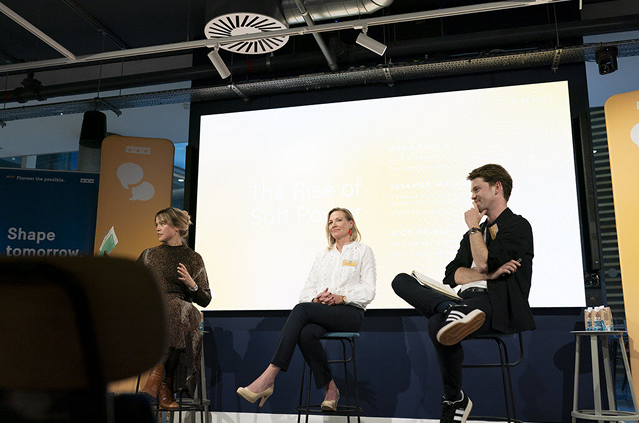


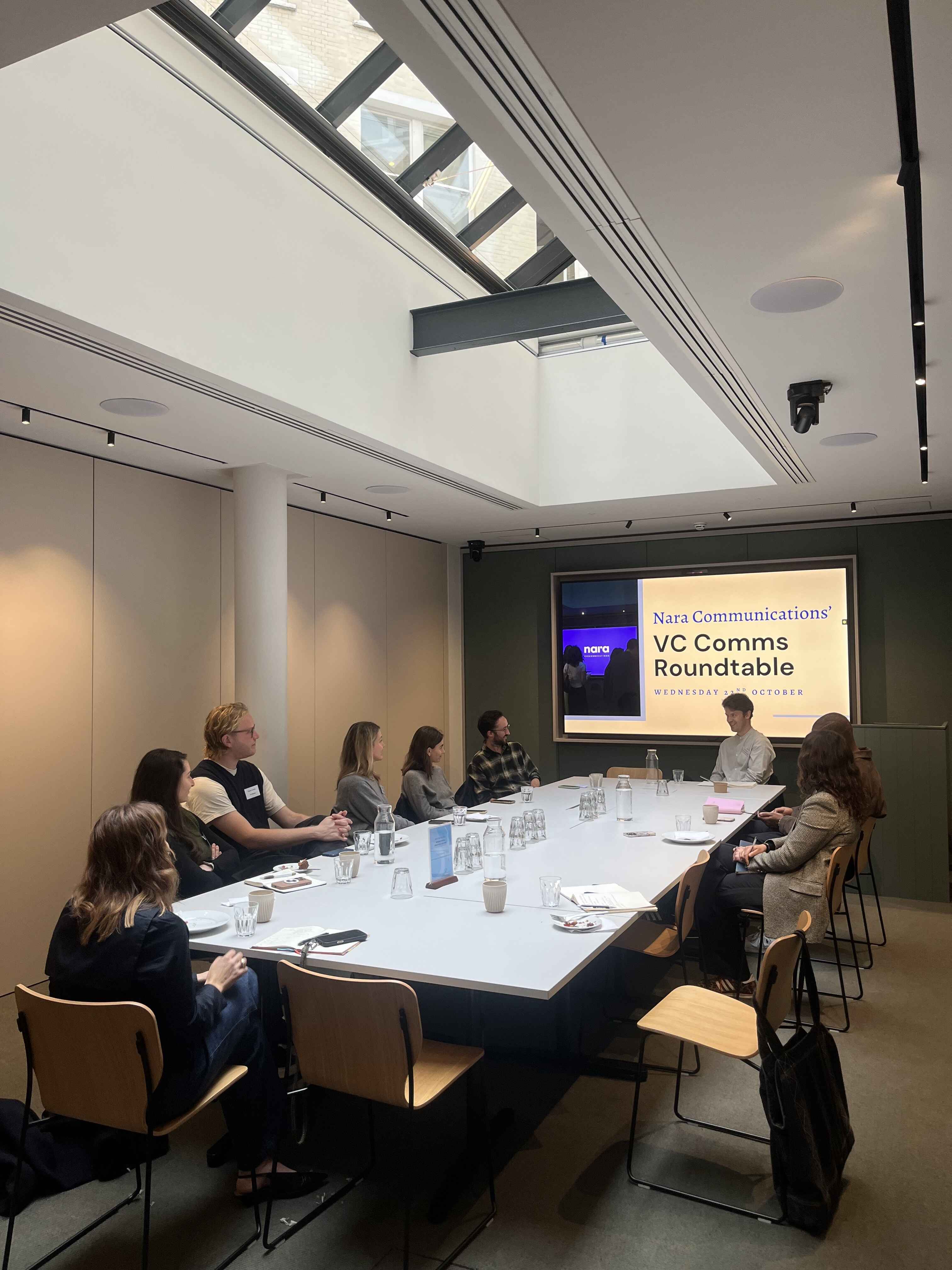
Change was the word of the day at Nara’s latest VC Comms Roundtable held earlier this week. Joined by 14 attendees from across the VC and communications industry, the room discussed how founders, investors, and the people who communicate on their behalf are navigating an increasingly complex environment.
Two themes dominated: the cultural shifts running through the tech and VC world, and the rise of Generative Engine Optimisation (GEO) - and what both mean for how businesses build and protect their reputations.
When Should VCs Weigh In?
Sparked by a recent Sifted piece on the permeation of ‘bro culture’ in the tech landscape, attendees discussed whether cultural conversations are an opportunity to raise visibility, or a fast track to eroding it.
Key takeaways:
Audience segmentation is everything. For example, there is a divergence between European and US cultural contexts. What resonates with a US-based audience may alienate a European one, and vice versa. Determining your audience is the first step before deciding whether and how to engage.
Don’t be afraid to take your time. There was broad agreement that a common-sense response will almost always outperform a reactive one. Before entering a conversation, ask: are you the best person to add value here? Antagonism might generate initial noise, but it rarely moves the needle in the right direction. Poorly thought out comms for the sake of adding to the conversation risks damaging the credibility you’ve spent time building.
Stage matters. Early-stage companies aren't expected to have the same resilience or public profile as those further along. The expectation to perform publicly increases as you approach IPO, and the communications strategy should reflect that.
The Environmental Case in Uncertain Times
There is a current pressure on firms in climate and sustainability to soften their ESG messaging, which in some cases is directly tied to commercial considerations. Many are pivoting to language around "resilience" or broader impact framing to navigate it.
But the solution isn't dilution.
As covered in the Financial Times, Larry Fink's latest annual letter is a useful case study in what overcorrection looks like. In 2020, he declared climate change "a defining factor in companies' long-term prospects" - this year, not a single mention of the word. Several pension funds have already ended arrangements with BlackRock citing concerns about its approach to sustainability.
The irony is that the underlying investment case hasn't shifted as dramatically as the messaging has - global energy transition investment reached a record $2.3 trillion in 2025, up 8% from the previous year. Reactive messaging risks producing incoherent branding, which can be harder to recover from than an unfashionable position.
The answer is to become more precise. "Climate tech" means many things to many people, and that vagueness can be a liability. The firms best insulated from fluctuating external sentiments are the ones who have defined their own lane tightly enough that the broader anti-ESG weather doesn't really apply to them.
The three words that define your company, your fund, or your thesis can be the most important communications asset you have. Get those right, and you’ve got a strong foundation you can build from.
GEO, AI, and the Future of PR
The second half of the session turned to what the rise of AI-driven search and Generative Engine Optimisation (GEO) means for how VC-backed companies build and maintain their reputations.
Key takeaways:
Reputation is still built on what others say about you. GEO only changes the infrastructure it runs through. The way we track visibility is evolving, but it rewards the same things it always has: genuine insight, consistent output and authoritative sourcing. GEO is SEO is good PR.
Founder-led content is a significant advantage. What a founder says publicly - on LinkedIn, in newsletters, in interviews - is increasingly what LLMs draw on when describing a company. Original thinking remains the most valuable currency. Repurposing content across channels is effective, but it has to be adapted to match the audience of each platform in order to be considered credible.
Don't over-index on any single platform. The cautionary tale of brands built on pre-Musk Twitter was raised more than once. Even as TikTok becomes the news source of choice amongst Gen Z, this could easily change in a few years - putting all your eggs in one basket now could be detrimental further along the line. The tools may keep changing, but the fundamentals won't. Chasing current AI visibility at the expense of substance risks the longevity of your brand.
What's Next?
Heading into Q2, the big bets are on community building, event presence, and GEO. Perhaps counterintuitively, as technology becomes more central to communications strategy, the emphasis on offline relationship-building is growing. Speed matters too: the firms getting the most from their communications work are the ones engaging founders before they've even fully set up.
Interested in attending our next roundtable or want to talk comms? Get in touch at hello@naracommunications.com
More from the blog
What we learnt from our VC Comms Roundtable

What we learnt from our VC Comms Roundtable
PR Week 30 Under 30: Nick Baines

PR Week 30 Under 30: Nick Baines
These are the top UK-based PR agencies for startups and scale-ups in 2024
These are the top UK-based PR agencies for startups and scale-ups in 2024
Want to work with us?
Book an introductory call with the Nara senior team to find out how they could help your brand grow.